
 Posts
Posts


There's an extremely interesting article out in the UK Independent which reports on evidence that the transmissions from millions of cell phones may be at the root of the collapse of honey bee colonies around the world. Research at Germany's Landau University suggests bees will avoid a hive if cell phones are place nearby. Interesting theory, and I'm sure it will get quite a bit of testing.
If it turns out that our cell phones are destroying honey bees, and thereby imperiling the fruit and berry crops pollinated by these bees, what should be done? Should we choose to unplug until the problems are solved?
Showing posts with label wildlife. Show all posts
Showing posts with label wildlife. Show all posts
Tuesday, April 17, 2007


Friday, March 23, 2007
WILDLIFE NOTES
How are things faring in the ARBORETUM?

Wolf Population Grows in Three States
By Associated Press
BILLINGS, Mont. -- The number of wolves in Montana, Idaho and Wyoming continues to grow, with at least 1,300 in the three states at the end of 2006, federal officials say.
"I keep thinking we're at the top end of the bubble," said Ed Bangs, wolf recovery coordinator for the U.S. Fish and Wildlife Service. "I can't see that there's room for any more, but we'll see."
========
Nevada Takes Steps to Protect Butterfly
By SCOTT SONNER
Associated Press Writer
March 20, 2007, 4:38 PM EDT
RENO, Nev. -- Federal land managers working to keep a rare Nevada butterfly off the list of endangered species have closed scores of off-road vehicle trails at one of the biggest, most popular sand dunes in the West.
The closure affects about six square miles of public land where an ancient lake once existed. The emergency order replaces a voluntary measure the U.S. Bureau of Land Management imposed two years ago on a portion of up to 200 miles of trails that run through shrubs and other vegetation that is home to the Sand Mountain Blue Butterfly, the BLM said.
========
American Croc No Longer Near Extinction
By BRIAN SKOLOFF
Associated Press Writer
March 20, 2007, 9:42 PM EDT
WEST PALM BEACH, Fla. -- The U.S. Fish and Wildlife Service declassified the American crocodile as an endangered species Tuesday, saying the animal has rebounded from the edge of extinction.
The reptile remains protected under the federal Endangered Species Act even though it was downgraded to a "threatened" species, making it illegal to harass, poach or kill the reptiles.
"It's just one step closer to recovery, but it still has many, many threats," Fish and Wildlife Service spokesman Tom MacKenzie said. "It's still protected with the full force of federal law."
The crocodile was on the brink of disappearing from South Florida, its only U.S. habitat, when it was originally listed as a federally endangered species in 1975. By 1976, the population was estimated at just about 300. Scientists now estimate there are up to 2,000 American crocodiles in Florida.

Wolf Population Grows in Three States
By Associated Press
BILLINGS, Mont. -- The number of wolves in Montana, Idaho and Wyoming continues to grow, with at least 1,300 in the three states at the end of 2006, federal officials say.
"I keep thinking we're at the top end of the bubble," said Ed Bangs, wolf recovery coordinator for the U.S. Fish and Wildlife Service. "I can't see that there's room for any more, but we'll see."
========
Nevada Takes Steps to Protect Butterfly
By SCOTT SONNER
Associated Press Writer
March 20, 2007, 4:38 PM EDT
RENO, Nev. -- Federal land managers working to keep a rare Nevada butterfly off the list of endangered species have closed scores of off-road vehicle trails at one of the biggest, most popular sand dunes in the West.
The closure affects about six square miles of public land where an ancient lake once existed. The emergency order replaces a voluntary measure the U.S. Bureau of Land Management imposed two years ago on a portion of up to 200 miles of trails that run through shrubs and other vegetation that is home to the Sand Mountain Blue Butterfly, the BLM said.
========
American Croc No Longer Near Extinction
By BRIAN SKOLOFF
Associated Press Writer
March 20, 2007, 9:42 PM EDT
WEST PALM BEACH, Fla. -- The U.S. Fish and Wildlife Service declassified the American crocodile as an endangered species Tuesday, saying the animal has rebounded from the edge of extinction.
The reptile remains protected under the federal Endangered Species Act even though it was downgraded to a "threatened" species, making it illegal to harass, poach or kill the reptiles.
"It's just one step closer to recovery, but it still has many, many threats," Fish and Wildlife Service spokesman Tom MacKenzie said. "It's still protected with the full force of federal law."
The crocodile was on the brink of disappearing from South Florida, its only U.S. habitat, when it was originally listed as a federally endangered species in 1975. By 1976, the population was estimated at just about 300. Scientists now estimate there are up to 2,000 American crocodiles in Florida.
Thursday, March 22, 2007
GOOSE UPDATE: BREAKING NEWS: (I mean, really breaking) -- Chicago whacking eggs.

Mar 21, 2007 7:24 am US/Pacific
Chicago Goes On Wild Goose Egg Chase
City Parks Begin New Population Control Program
Volunteers Hunt Eggs, Goose Management Co. Shakes Them
(AP) CHICAGO The city needs a flock of volunteers - for goose egg patrol.
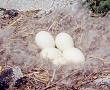
Chicago-area park district officials are enlisting people to help locate nests of goose eggs as part of an expanded program aimed at downsizing the population of the aggressive park-fouling birds.
The patrols will search 11 city parks for goose eggs during the birds' nesting season, which begins at the end of the month and lasts through April.
The volunteers will be taught about geese habitats and life cycles, but they won't be allowed to handle the eggs. That task will be reserved for employees of La Grange-based Wild Goose Chase, who will shake the eggs to destroy the embryo or coat them with corn oil to suffocate the developing chick.
"I can't stress enough, this is not an Easter egg hunt," said Susan Hagberg, president of Wild Goose Chase. "This is very regulated. If people think they can do this on their own, they can't."
Park officials have tried to control the flocks by planting grasses less attractive to the birds along lagoons, spraying digestive irritants on grass in Grant Park, and using border collies to drive migrating geese away in the fall.
The Humane Society of the United States supports the egg hunting method, said spokeswoman Diane Webber.
"It's much more humane than rounding up the geese and gassing them," she said.
Wednesday, March 21, 2007
CANADA GEESE

Nearly everyone in Michigan has put their foot in it at some time. Goose droppings.
The Giant Canada Geese are the culprits. They seem to be without number, and they poop freely wherever they go. This is not nice poop, it is vile. (Actually, there are about 187,000 est., Canada Geese in Michigan.)
In the JACK PINE WARBLER, a publication of the Michigan Audubon Society (March/April 2007), the problem of the big nuisance is discussed. One theme of this story is that we the people are inviting these birds into our lives when they ought to be off somewhere minding their own business.

Here's how we do it: We build ponds and then plant near them, the sort of flora the geese like.
Not only that, within the confines of backyards, golf courses, and municipal ponds, the geese are safe from their predators: fox, bobcats, coyotes, and hunters.
Too, grammas, bird lovers and little kids with popcorn like to feed them .
Here are some suggestions from the DNR and Audubon:
1. Build barriers (fences, hedges, etc.) between ponds and grassy areas. Three foot high barriers are enough.
2. Don't ever feed them. Try to deny them sources of food.
3. Hunt them.
4. Apply repellants to grassy areas.
5. Train a dog to chase them. Of course, dogs add a new problem.
No one, least of all, the DNR or the Audubon Society, wants to wipe them out. But, they can be discouraged from areas where they are a nuisance. It's not an easy problem, and as Audubon says: if you find you have a small problem and don't deal with it, you'll discover that you have a very big problem.
Subscribe to:
Posts (Atom)